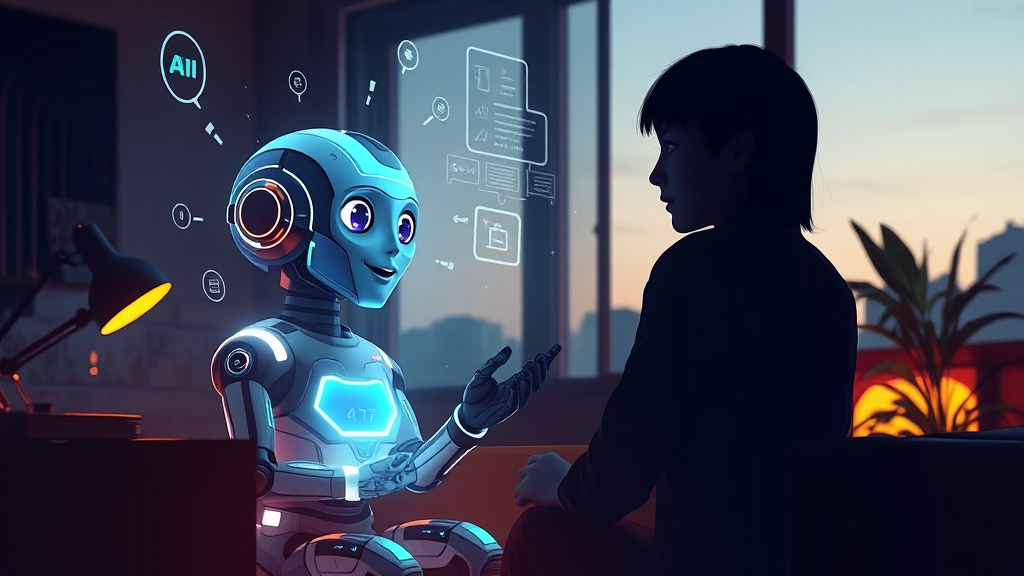
CrushOn AI: A Practical Guide to Character-Driven Chat
Conversational AI has moved far beyond generic question-and-answer tools. People now look for platforms that let them shape a personality, set a scenario, and carry on a story over many sessions. CrushOn AI sits squarely in that space: it is a character-focused chat platform where the appeal is not just the language model, but the cast of characters and the freedom to create new ones. This guide explains how the platform works, what makes it different, and how to get the most out of it without wasting time on trial and error.
What CrushOn AI Actually Is
At its core, CrushOn AI is a web-based chat environment built around characters rather than a single assistant. Instead of opening a blank chat box and typing a prompt, you browse a library of personas, each with its own backstory, tone, and conversational style. You can pick an existing character or build your own from scratch, defining traits, greeting messages, and example dialogue that guide how the model responds.
The platform is designed for extended interaction. Characters remember context within a conversation, so a chat can develop over dozens of messages rather than resetting every few exchanges. That continuity is what turns a simple chatbot into something closer to interactive fiction, roleplay, or a companion-style experience, depending on how you use it.
Because the focus is on characters, the interface stays deliberately simple. There is a discovery area for browsing, a creation flow for custom personas, and a chat window that prioritizes the conversation itself. You do not need technical knowledge of model parameters or prompt engineering to get started, though a little care in how you write a character pays off quickly.
Why Character-Based Chat Appeals to Different Users
Not everyone wants the same thing from an AI conversation. Some users want a creative partner for writing, some want to explore a fictional scenario, and others simply enjoy casual banter with a consistent personality. A character-driven platform serves all three because the character, not the model, sets the tone.
Writers often use these tools to test dialogue. By assigning a character a specific voice, vocabulary, and attitude, they can generate exchanges that feel closer to a draft scene than to a generic summary. Roleplayers use characters to maintain a consistent persona across a long story, which is difficult to do with a single undifferentiated assistant. Casual users enjoy the novelty of talking to someone with a defined personality rather than a neutral helper.
There is also a practical benefit: characters reduce the blank-page problem. When you open a chat and a character greets you in their own voice, you have something to respond to immediately. That lowers the barrier for people who find open-ended prompting intimidating.
Creating a Character That Works
The quality of a chat depends heavily on how the character is defined. A vague description like “friendly and helpful” produces vague replies. A specific description produces specific behavior. The most effective characters combine a few clear elements.
First, give the character a role and a context. Are they a detective in a rainy city, a space station engineer, a historical figure, or a cheerful neighbor? Role shapes vocabulary and priorities. Second, define a tone. Formal, sarcastic, warm, terse, or poetic all produce noticeably different conversations. Third, add a few example lines. Even two or three sample messages teach the model more about the intended voice than a paragraph of adjectives.
Finally, keep the definition focused. Characters that try to be everything at once tend to drift. A character with three strong traits will feel more consistent than one with fifteen weak ones. If you want variety, create multiple characters instead of overloading a single persona.
Getting Better Results in Everyday Chats
Once a character is set, the conversation itself benefits from a few habits. Stay in the scene. If the character is a medieval innkeeper, asking about smartphone apps breaks the illusion and pulls the model out of character. If you need a factual answer, a neutral assistant is usually the better tool; character chat is strongest when you lean into the fiction.
Give the character something to react to. Short replies like “okay” or “sure” stall a conversation because there is little to build on. Describing an action, asking a question, or introducing a small complication keeps the exchange moving. Think of it as co-writing rather than querying.
Use the character’s memory deliberately. Long conversations accumulate context, which is useful for continuity but can also drift if the topic wanders too far. If a chat loses focus, starting a fresh session with the same character often produces a cleaner result than trying to steer a confused thread back on track.
Safety, Boundaries, and Responsible Use
Any platform that allows open-ended character creation raises questions about content boundaries. Responsible use starts with the user: treat the experience as entertainment and creative exploration, not as a substitute for real relationships or professional advice. Characters can simulate empathy, but they do not provide it in the human sense.
It is also worth remembering that characters are fictional constructs. They do not have feelings, memories outside the chat, or intentions. Keeping that distinction clear helps prevent the kind of over-attachment that can develop when a conversation feels unusually personal. If a chat becomes uncomfortable, the right move is to stop, adjust the character, or switch to a different persona.
For younger users or shared devices, parental awareness matters. Character chat is a creative tool, and like any creative tool, the experience depends on how it is used. Setting expectations early keeps the platform enjoyable rather than problematic.
How CrushOn AI Fits Into the Wider AI Chat Landscape
The broader AI chat market splits into a few categories: general assistants for productivity, specialized tools for coding or research, and character platforms for entertainment and creativity. CrushOn AI clearly belongs to the third group. It is not trying to be a calendar assistant or a code reviewer. Its value comes from the combination of a character library, custom creation, and persistent conversations.
That focus is an advantage. General assistants often feel flat in creative contexts because they are optimized for accuracy and neutrality. Character platforms trade some of that neutrality for personality, which is exactly what makes them engaging. Users who understand the trade-off get more out of the experience.
Compared with building a custom chatbot from scratch, a hosted platform removes the technical overhead. You do not manage servers, fine-tuning jobs, or API keys. You create a character, start chatting, and refine as you go. For most users, that convenience is the deciding factor.
Common Mistakes New Users Make
The first mistake is expecting a character to be perfect on the first message. Characters often need a few exchanges to settle into their voice. Patience and small corrections go a long way.
The second is writing an overly long character description. Length is not the same as clarity. A tight, specific definition outperforms a sprawling one.
The third is treating every chat as a test of the model’s intelligence. Character chat is a creative exercise. Judging it purely on factual accuracy misses the point and leads to unnecessary frustration.
The fourth is ignoring the discovery library. Browsing existing characters is one of the fastest ways to learn what works. Seeing how successful personas are written teaches more than reading documentation.
FAQ
Is CrushOn AI free to use?
The platform offers access to character chat, with the exact feature set and any limits depending on the current plan structure shown on the site. It is best to check the live platform for the most accurate and up-to-date details before committing to regular use.
Can I create my own characters?
Yes. Character creation is a central feature. You define the persona, tone, and background, and you can refine the definition over time as you see how the character behaves in conversation.
Do characters remember previous messages?
Characters maintain context within a conversation, which allows for continuity across a long chat. Starting a new session typically resets that context, so important details are best kept within the active thread.
Is character chat suitable for professional advice?
No. Character chat is designed for entertainment and creative exploration. It should not be used as a substitute for medical, legal, financial, or mental health guidance from qualified professionals.
What makes a character feel realistic?
Specificity. A clear role, a defined tone, and a few example lines produce more consistent behavior than broad descriptions. Consistency over many messages is what creates the sense of a real personality.
Final Thoughts
CrushOn AI succeeds because it understands that conversation is more engaging when there is a someone on the other side, even a fictional someone. The platform lowers the technical barrier to character-based chat while leaving room for creativity, and it rewards users who take a few minutes to define their characters well. Whether you are writing dialogue, exploring a story, or just looking for a more personable chat experience, the character-first approach is what sets it apart. Approach it as a creative tool, set clear boundaries, and it becomes a genuinely enjoyable way to spend time with AI.